Renault Filante Record 2025 has delivered one of the most impressive EV efficiency results ever recorded. By combining extreme aerodynamics, low weight, and intelligent engineering, Renault has shown what electric cars could achieve when efficiency becomes the top priority.
Renault Filante Record 2025 Sets New EV Efficiency Benchmark
 By
shawn
By
shawn
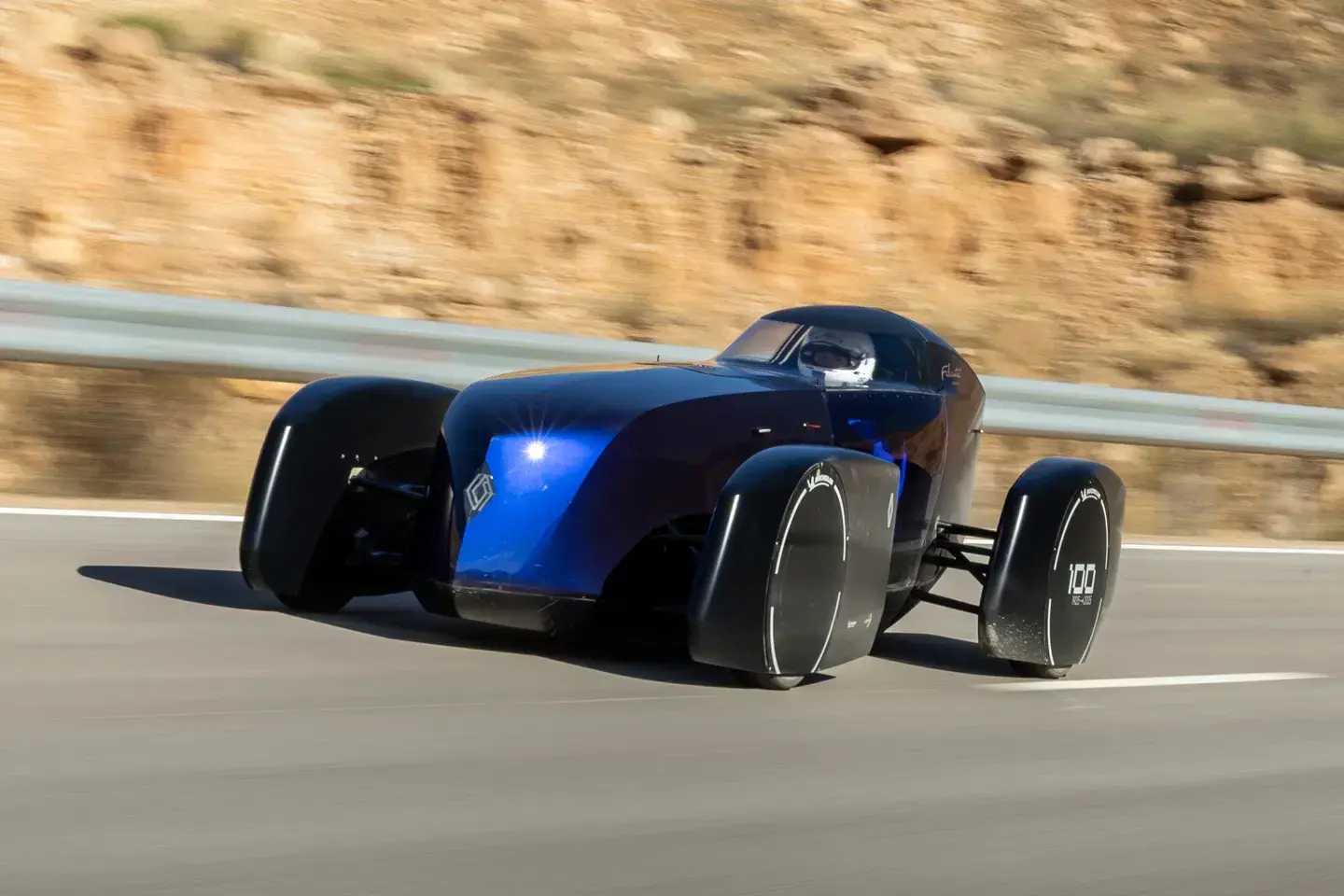
Renault has proven that extreme EV efficiency isn't just theoretical.
Less than a year after revealing the radical Filante Record 2025 concept, the French brand has completed a record-setting endurance run that shows just how far electric vehicle efficiency can be pushed when weight, aerodynamics, and intelligence are prioritised.
During a long-distance test in Morocco, the Renault Filante Record 2025 covered 1,008 kilometres (626 miles) in under 10 hours, averaging 102 km/h (63 mph) while consuming just 7.8 kWh/100 km.
That equates to roughly 8 miles per kWh, around double the efficiency of most modern production EVs.
High-Speed Efficiency, Not Laboratory Conditions
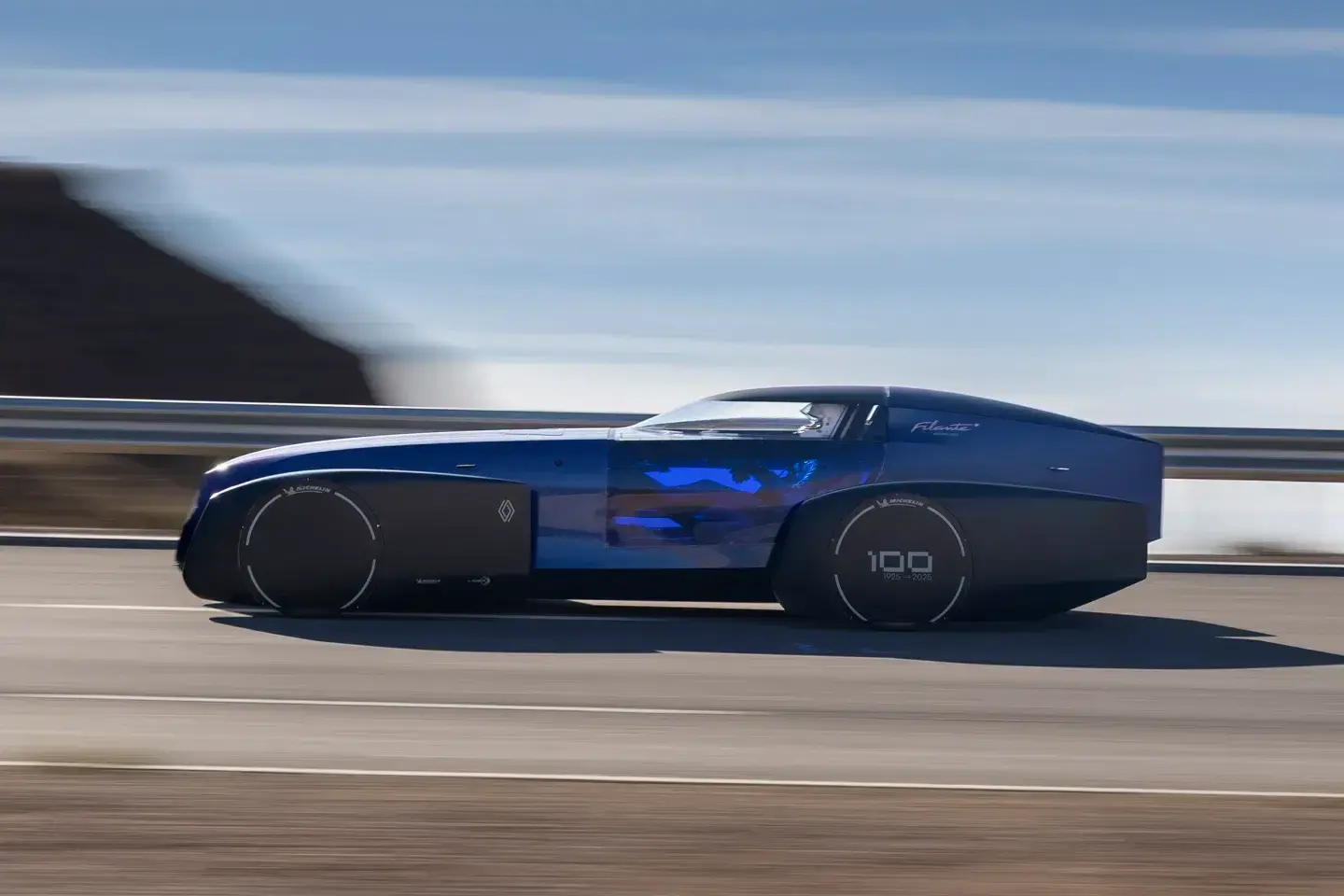
What makes Renault's achievement particularly impressive is the speed at which it was completed.
Drivers, including former Renault Nürburgring specialist Laurent Hurgon, were instructed to keep speeds above 68 mph for their entire stint to replicate sustained motorway driving.
Even after the marathon run, the Filante still had 11 percent battery capacity remaining.
Based on its demonstrated consumption, Renault estimates it could have continued for another 75 miles at more than 62 mph, highlighting just how efficient the concept really is in real-world conditions.
For context, the Filante shares its 87 kWh battery with the long-range Renault Scenic E-Tech, which carries a WLTP efficiency rating of 4.28 miles per kWh—a figure achieved under far less demanding conditions.
Aerodynamics Were Key to the Record
Efficiency at motorway speeds lives and dies by aerodynamics, and Renault invested heavily in refining the Filante's shape. Earlier this year, the concept underwent extensive wind tunnel development, reducing its drag coefficient from 0.40 to 0.30.
That reduction significantly lowered energy demand at higher speeds, turning steady cruising—often a weakness for EVs—into the Filante Record 2025's greatest strength. The streamlined, record-inspired body is fundamental to the car's extraordinary results.
Lightweight Engineering in a Heavy EV Era
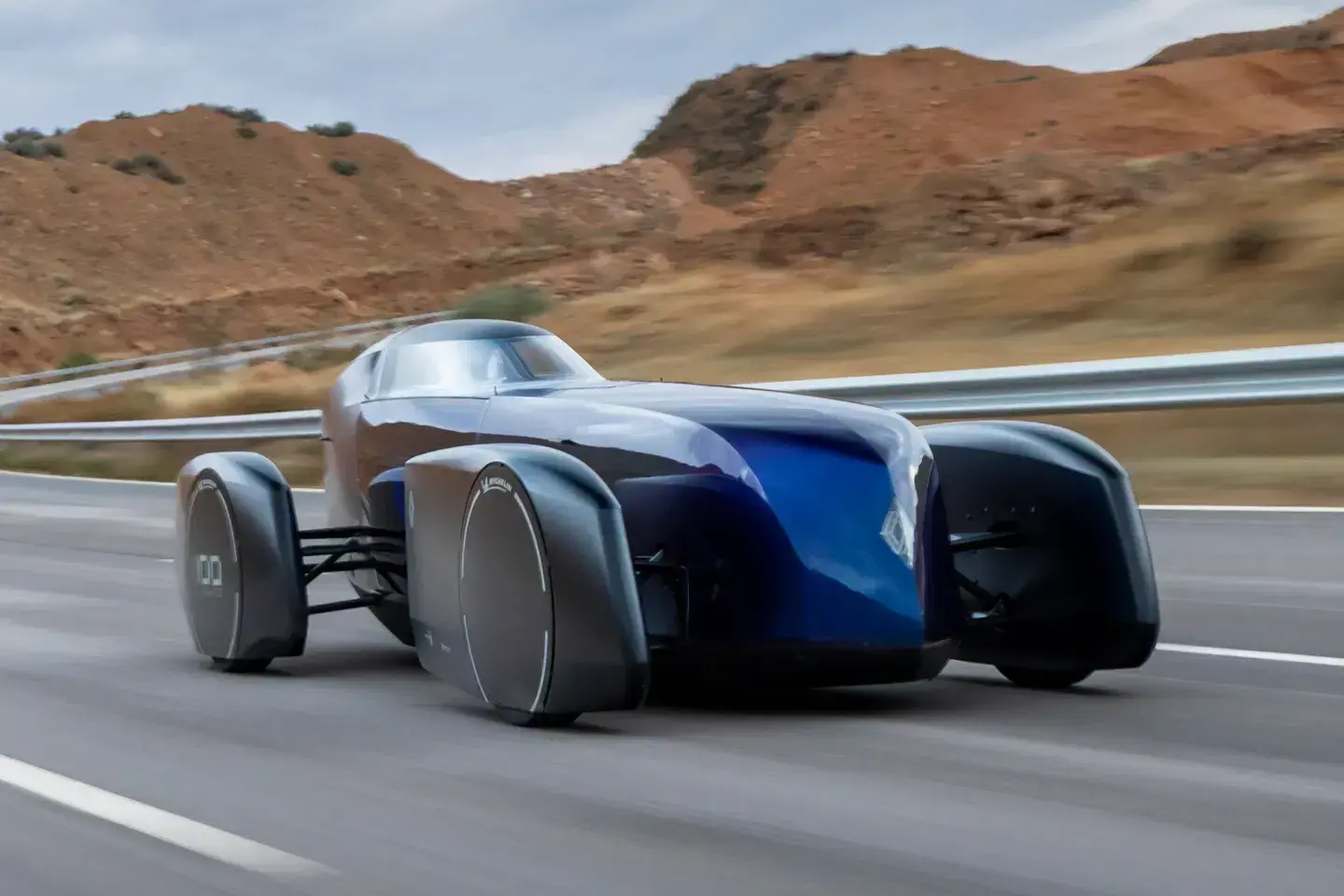
While many battery-electric vehicles now weigh more than two tonnes, the Renault Filante Record 2025 tips the scales at just 1,000 kg. That low mass plays a major role in its efficiency and underlines a growing issue in modern EV design.
Renault has already earned praise for keeping its EVs relatively light—the upcoming Renault 5 EV weighs under 1,400 kg—but the Filante shows how far weight reduction can go when efficiency becomes the primary goal.
Advanced Materials and Smart Packaging
To reach its record-breaking numbers, Renault fitted the Filante with one-off Michelin low rolling resistance tyres and made extensive use of carbon fibre, aluminium, and 3D-printed Scalmalloy.
Every component was optimised to use material only where necessary.
The concept also features steer-by-wire and brake-by-wire systems, eliminating heavy mechanical components and opening up new packaging possibilities. These technologies are no longer theoretical and are edging closer to production readiness.
Why the Filante Record 2025 Matters
Renault won't be selling the Filante Record 2025 in showrooms, but its purpose is clear.
Like the Mercedes-Benz Vision EQXX, this concept demonstrates what's possible when EVs are designed to be lighter, smarter, and more aerodynamic rather than simply fitted with ever-larger batteries.
Renault has teased "a few exciting surprises" in 2026 as development continues, suggesting elements of the Filante's thinking could influence future production models.
"This project was born from an obsession: achieving record-breaking efficiency… what stands out most for me is the human adventure and the dedication of the Renault teams and our partners."
— Olivier Blanche, Project Manager, Filante Record 2025
Final Thoughts
The Renault Filante Record 2025 isn't about speed or outright performance—it's about redefining efficiency at real-world speeds. In a market increasingly dominated by heavy electric vehicles, it serves as a powerful reminder that smarter design, not bigger batteries, may shape the future of electric mobility.
And for those wanting a deeper look behind the scenes, Renault has confirmed a Filante mini-series is coming to YouTube, documenting one of the most fascinating EV engineering projects in recent years.


Written By



Car News EV technology Renault Filante Record 2025 electric vehicle efficiency EV concept car lightweight electric cars aerodynamic EV design 2025 EV concepts
Related posts

In Car Lists
The Most Exciting New Cars Coming in 2026
New cars for 2026 are shaping up to be some of the most exciting we’ve seen in years. From electric breakthroughs to outrageous performance machines, the next wave of models promises real innovation. You’ll discover the cars worth waiting for and why they matter.

In Trucks
Mercedes-Benz Unveils a Luxury Unimog Unlike Any Other
The luxury Unimog takes Mercedes-Benz’s most extreme off-road truck into unexpected territory. By blending legendary Unimog capability with premium comfort, this build challenges what a luxury vehicle can be.

MANHART MHX6 500 Unleashed: 480 HP Transforms the BMW X6
The MANHART MHX6 500 proves that meaningful performance gains don’t require full M-car excess. Based on the BMW X6 xDrive40i, this refined tuning package delivers more power, sharper presence, and everyday usability.
Add a comment