
Body kit materials play a huge role in how your car looks, drives, and survives daily use. If you’ve ever wondered why some kits crack instantly while others take years of abuse, the answer is material choice. In this guide, you’ll discover how each option performs in the real world.
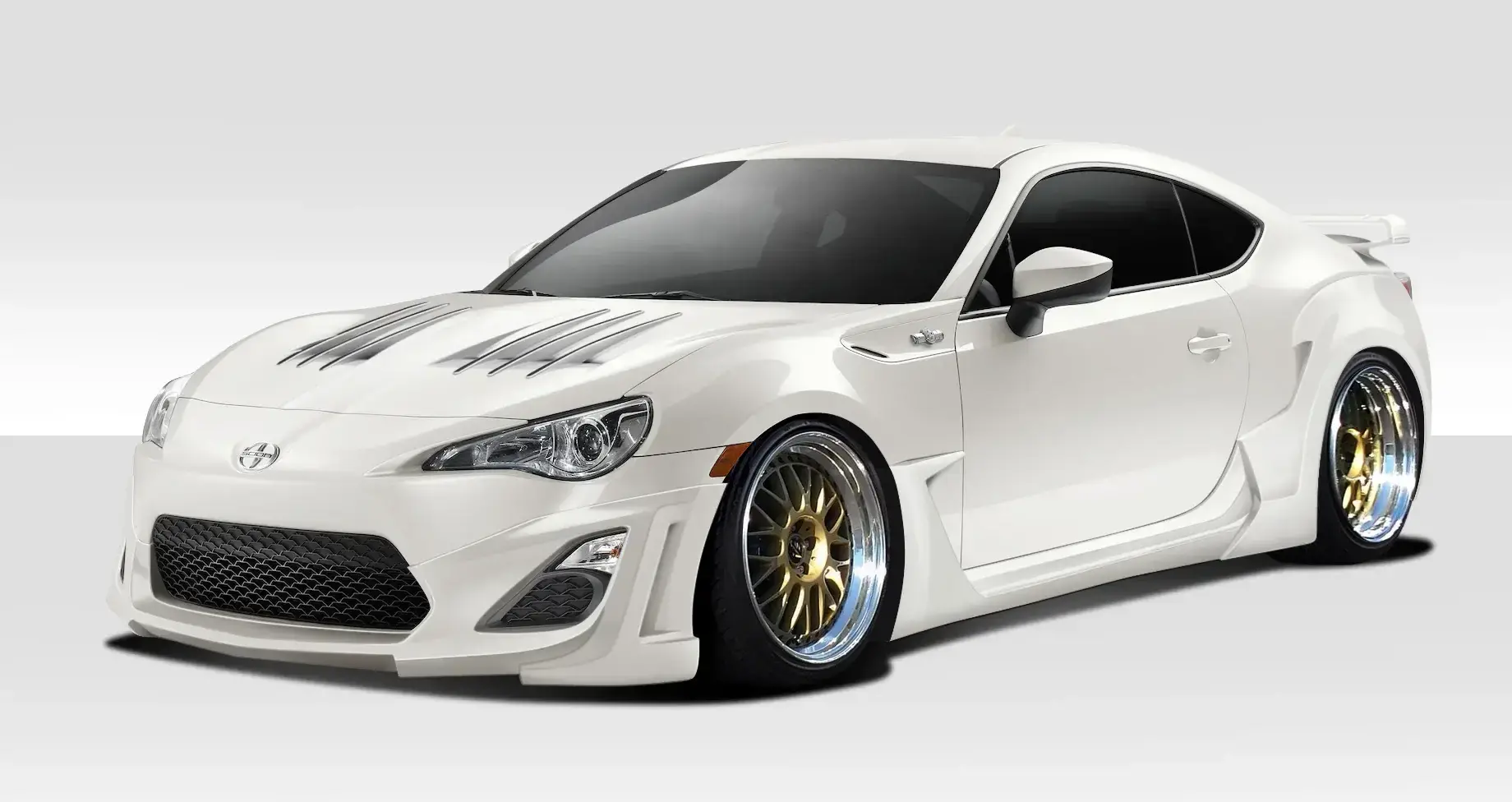
Everyone knows that the main role of a body kit is to alter the appearance of a car, but aside from that, there are several other reasons to get one for your project car.
For instance by replacing the factory components, you can reduce weight, improve aerodynamics, ventilation and direct more air into the engine or even cool down the brakes.
One of the most important considerations for choosing a body kit is the material, as it’s the number one thing that determines whether it survives years of abuse or cracks the first time you hit a speed bump. If you ever checked body kits online, you may have noticed that the same front bumper may cost anywhere from a couple of hundred bucks up to thousands and in most cases this price difference comes from the material.
An entry level fiberglass part can cost $300, polyurethane $800, and carbon fiber whopping $2,000 for the identical design. Is the expensive one worth it?
Depends entirely on how you use the vehicle and what are your objectives. Someone buying a carbon fiber 350z hood for a dedicated track build where weight matters has completely different priorities than someone installing a cheap fiberglass bumper on an 8th Gen Civic to spice up the looks.
There are four key materials you’ll find on the market of body kits: fiberglass, polyurethane, ABS plastic and carbon fiber. Each has specific characteristics that make it right for certain applications and, in some cases, terrible for others.
I'll break down what each material actually is beyond the marketing BS, real-world durability based on how people actually use these parts, and which material makes sense for your specific situation instead of just recommending the most expensive option like most articles do.
Fiberglass – Cheap, Light, and Fragile
One of the most widespread materials is certainly fiberglass. As the name suggests, this material consists of glass fibers woven into layers and soaked in resin (usually polyester, epoxy, or vinyl ester). The technology of creating parts from fiberglass is pretty straightforward for DIY use, that’s why it's been around for decades, although their quality varies significantly.
While premium brands can use multilayer structure and quality resin, cheap manufacturers are downgrading the quality in favor of price. A $600 brand-name front bumper and the $200 alternative are both "fiberglass" pieces, but the difference between the two is drastic.
Pros
- Among all material types, Fiberglass is one of the lightest beside the carbon fiber, which matters for performance-oriented builds where every pound counts.
- It’s also the more affordable option and it definitely makes sense for the show car owners (with minimal damage risks) or budget drift/track builds where you just can’t spend too much on top-tier body parts.
Cons
- Fiberglass is pretty rigid, which means that it can crack and chip instead of flexing during an impact.
- Hit a parking curb, scrape a driveway entrance and there is a pretty high chance for a chip.
- Also, cheap kits sometimes have poor fitment and require lots of cutting, filling, and sanding to align properly.
Polyurethane (Urethane) – Flexible and Durable
Polyurethane is one of the materials widely used by the OEM manufacturers for factory bumper covers and trim pieces. It's a true elastomer that stretches under impact and returns to its original shape instead of cracking. This is the material for vehicles that actually get driven.
The manufacturing process involves injection molding or casting which is more complex and costly, but the end result is totally worth it. Body parts made using this material bend and flex instead of cracking. In most cases parts come out of the mold with smooth surfaces and consistent thickness. Fit is usually excellent because there's minimal warping or variation between production pieces.
Pros
- Yes, polyurethane absorbs impacts that would shatter fiberglass.
- For example, a bumper made of this material can flex and bounce back if you lightly hit it on a parking lot or do a small bump at the track.
- It also offers the closest to OEM quality and fitment.
Cons
- There are few drawbacks of this awesome material.
- Body parts made of it are usually slightly heavier than fiberglass alternatives, because of the material density.
- Pricewise, they’re also on the more expensive side.
- All in all it's the better option for the daily drivers, street and track/drift cars seeing real use.
- Anyone who doesn't want constant repairs should consider this option (pay more upfront but spend less on fixes in the long run).
ABS Plastic – Factory-Quality Alternative
ABS plastic is a thermoplastic blend - acrylonitrile plus styrene plus polybutadiene rubber. Much like the urethane that we discussed above, it’s the same stuff car manufacturers use for factory trim pieces, interior panels, and some body components. This material is engineered to handle impacts, temperature swings, and chemicals without altering the shape or cracking.
Again, the manufacturing process involves injection molding with granular fillers mixed in for stiffness. The fillers give it rigidity but can cause breakdown over time, especially in cheaper formulations.
Pros
- Impact resistance is solid without being flexible like polyurethane.
- It’s also heat and chemical resistant to handle weather and road chemicals better than fiberglass.
- Paint adheres beautifully - best surface for painting of any body kit material.
- Fit is better than fiberglass, closer to polyurethane quality.
- Resists dents and holds its shape.
- For daily drivers wanting an upgrade from fiberglass without polyurethane prices, ABS makes sense.
Cons
- It’s slightly less flexible than polyurethane, so it can crack under extreme stress where urethane would just flex.
- Again, it’s heavier than fiberglass and typically costs more than fiberglass but doesn't offer polyurethane's flexibility.
Carbon Fiber – Lightweight and Expensive
In essence, Carbon fiber is thousands of carbon atoms bonded in crystal structures, woven into fabric, then soaked in epoxy resin (if coated). Same material used in aerospace, F1 cars, and anywhere weight matters more than cost. It's been around since the 1950s when they used it to reinforce missiles, so this isn't new technology.
Manufacturing involves laying carbon fiber fabric into molds with epoxy, then vacuum bagging or autoclaving under pressure and heat. Quality parts get UV-resistant clear coat to show the distinctive weave pattern. Cheap parts can be pretty thin and come uncoated.
Pros
- It’s the lightest material available for body kits.
- For example, a carbon fiber hood can save 15–30 pounds over steel and 5–10 pounds over fiberglass.
- For track cars, where less weight equals faster acceleration, better handling, improved braking it matters a lot.
- The strength-to-weight ratio is unmatched.
- It's stiff without being brittle like fiberglass.
- The woven appearance has long become the status symbol whether you care about that or not.
- Real performance benefits are there if you're actually racing your car.
Cons
- Carbon fiber can get expensive, $1,000–3,000+ per piece and sometimes way more.
- Repairs require specialists and cost a fortune.
- UV exposure degrades it over time without a proper clear coat.
- It's also not dramatically more impact-resistant than fiberglass.
- It's just stronger for its weight ratio, but a solid hit can cause serious damage.
Material Matters More Than Design
The same body kit design performs completely differently depending on material. Cheap fiberglass cracks the first time you hit a curb while polyurethane survives years of daily driving abuse, so it’s important to choose the material for your use case: fiberglass for show cars and race builds where weight matters, polyurethane for daily drivers who don't want constant repairs, carbon fiber only if you're actually tracking the vehicle and weight savings justify the 5x cost premium.
Buy from reputable manufacturers with proven track records, not random eBay sellers, because quality varies massively within each material category and you can't tell if it's garbage until it's already cracked on your vehicle.

Add a comment